*Originally published in Japanese in JMCA web+ on June 27th, 2025.
English translation by the author.
In the previous Louis Vuitton installment, we examined how a luxury brand uses an in-store café as a form of “exceptional experience.” This time, we turn to what may appear to be the opposite approach: UNIQLO’s strategy of leveraging everydayness as its strength.
While the method—placing a café inside a store—may be the same, the meaning and strategic intent are entirely different. By looking at UNIQLO’s case, we can begin to see the diverse answers behind why brands are now choosing to integrate cafés into their retail spaces.
“The Everydayization of the Extraordinary”
UNIQLO’s Strategy to Become a Brand People Spend Time With
On Fifth Avenue in New York—an iconic street lined with luxury brands—UNIQLO’s in-store initiative, Uniqlo Coffee, carries significance far beyond that of a simple café addition. Unlike the Louis Vuitton example discussed previously, this initiative operates within a completely different strategic context, offering insight into how mass-market brands are responding to their own structural challenges.
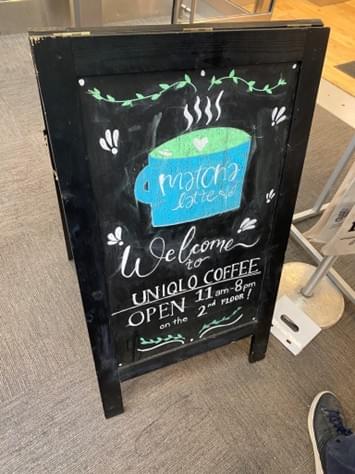
Photo: Niena Etsuko Hino
Signage for UNIQLO COFFEE at the store entrance
“Price Advantage × Experiential Touchpoints”
A New Path for Brand Evolution
Located on the second floor of UNIQLO’s Fifth Avenue flagship, Uniqlo Coffee occupies a space previously operated by Starbucks and serves drinks such as coffee and matcha lattes. Yet the significance of this space extends far beyond the mere addition of café functionality.
Nicolas Cessot, Head of Marketing for UNIQLO North America, has stated that the goal of the café is to create a place where customers can relax while deepening their connection with the brand. This reflects a deliberate response to UNIQLO’s long-standing structural challenge.
At its core, UNIQLO’s strength lies in its accessibility—anyone can enter, even without a specific purpose. However, that very openness has also led to a persistent dilemma: while product quality is high, emotional differentiation beyond price has been difficult to sustain. The café functions as a strategic answer to this problem.
Gen Z and the Desire to “Try On” a Brand
Another major shift lies in consumer behavior itself. For Gen Z and younger consumers, purchasing decisions are increasingly preceded by a desire to “try on” a brand’s worldview. This trial, however, is not about clothing—it happens through space, atmosphere, and time spent.
According to McKinsey research, Gen Z places a stronger emphasis on in-store sensory experience than older generations, while simultaneously expecting seamless digital purchasing. In physical retail environments, being made to feel welcomed and respected—a sense of human warmth even within tech-enabled spaces—has become particularly important. As a result, physical stores are being re-evaluated as essential arenas for brand experience.
Opened on March 14, 2025, Uniqlo Coffee directly responds to this demand. As UNIQLO’s first café in North America, it allows customers to experience the brand’s “Japanese simplicity” while enjoying a matcha latte. Before even touching a product, visitors are invited to taste the lifestyle UNIQLO represents.
Designing the Path to the Café—and What Happens Along the Way
The route to the café itself is carefully designed. From the entrance, customers head toward the café by ascending the staircases on either side of the store. Along the way, they encounter a landing area featuring a large display called UNIQLO BOOKSHELF.
This area showcases books, manga, toys, and small items centered on Japanese pop culture, along with seating where visitors can pause and relax. Before engaging with UNIQLO’s apparel, customers are exposed to another dimension of the brand: a curated expression of contemporary Japanese lifestyle.

Photo: Niena Etsuko Hino
UNIQLO BOOKSHELF
The Café as “White Space” Within Everyday Life
UNIQLO aims to function like social infrastructure—an essential part of daily life. Yet that very neutrality has made emotional connection more difficult to cultivate. The café serves as a form of “white space,” creating reasons to visit that go beyond purchasing.
Stopping by for coffee without intending to shop, or choosing the café as a calm refuge from Fifth Avenue crowds, gradually fosters feelings such as “I kind of like this place” or “I tend to come back.” These subtle emotional attachments accumulate into brand affinity.
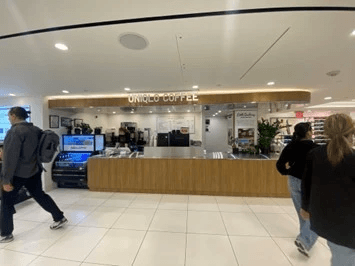
Photo: Niena Etsuko Hino
UNIQLO COFFEE
In practice, finding an affordable, comfortable place to sit for coffee on Fifth Avenue is surprisingly difficult. Full-service cafés demand time and money, while quick-service options rarely offer seating. Uniqlo Coffee fills this gap, becoming a convenient place where one can comfortably stop alone.
The author herself keeps Uniqlo Coffee in mind as one of several reliable options when looking for coffee around Fifth Avenue. Entering the store with no intention to shop, she nevertheless finds that once inside, products naturally catch the eye. The possibility of thinking, “That might actually be nice,” and making a purchase is very real.
This is the essence of UNIQLO’s strategy: creating a reason to visit first. By offering a place to pause for coffee, the brand establishes a highly effective entry point. In the heart of a major tourist destination, being known as “a place you can casually stop by” becomes a form of value in itself—one that lingers in visitors’ memories and may later translate into interest or purchases back home.

Photo: Niena Etsuko Hino
Seating area around UNIQLO COFFEE
This approach aligns closely with McKinsey’s findings that companies prioritizing customer experience tend to see higher sales growth and increased repeat purchasing.
Niena’s Cut
Part 1 Summary
UNIQLO’s café strategy is not a simple add-on service, but a strategic response to the brand’s core challenge. By maintaining its hallmark accessibility while introducing emotional differentiation, UNIQLO addresses Gen Z’s desire to “try on” a brand and creates reasons to be chosen within everyday life.
In Part 2, I will explore how the concept of becoming “a brand people spend time with” offers new insights for corporate strategy and management.
This article is part of Insights by Niena Etsuko Hino, a collection of selected English articles and translations exploring branding, executive presence, and cross-cultural business strategy.