*Originally published in Japanese in AdverTimes on June 27th, 2025.
English translation by the author.

Photo: Niena Etsuko Hino
What New York’s Pickleball Boom Reveals About the Redefinition of Experience
What’s happening around pickleball courts in New York City offers a glimpse into how urban consumers are redefining value.
At first glance, pickleball may look like just another emerging sport. In reality, it is catalyzing a broader shift in urban lifestyles—one that is quietly reshaping how brands, communities, and physical spaces relate to one another.
A hybrid of tennis, table tennis, and badminton, pickleball has moved well beyond the category of a casual sports trend. It is increasingly functioning as a platform for social connection, experiential consumption, and community building—elements that sit at the core of next-generation brand strategy.
Explosive Growth Is Only the Surface Story
To understand why pickleball matters, it helps to start with the numbers.
According to data compiled by Pickleheads, the Sports & Fitness Industry Association (SFIA) reports that the number of pickleball players in the United States reached 19.8 million in 2024, representing a remarkable 45.8% year-over-year increase.
In New York City, the impact is visible across the urban landscape. Existing tennis courts are being converted at a steady pace, and facilities across multiple parks and mixed-use developments are rapidly expanding. In May, Wollman Rink in Central Park opened 14 permanent pickleball courts. In April, former world No.1 tennis player Andre Agassi made his professional pickleball debut—an event that symbolically marked the sport’s elevation from an “easy-entry pastime” to a recognized competitive discipline.
Yet the most important takeaway is not growth alone. It is what this growth signals about changing consumer behavior.
Why Pickleball Is a Business Signal, Not a Sports Trend
The business relevance of pickleball lies in how it redefines experience.
Traditional sports marketing has long been structured around clear roles: playing, watching, or cheering. Pickleball dissolves these boundaries.
At venues such as CityPickle in New York, courts are intentionally placed alongside bars and lounges. Playing while socializing, watching while having a drink, or talking while waiting for the next game are not side activities—they are the experience itself.
This design reflects a deeper shift in how urban consumers allocate time. Rather than committing to a single, isolated activity, people increasingly seek environments that allow multiple forms of value to coexist. Pickleball makes this preference visible by turning the sport into a social platform rather than a standalone event.
Two Fashion Narratives Emerging From One Sport
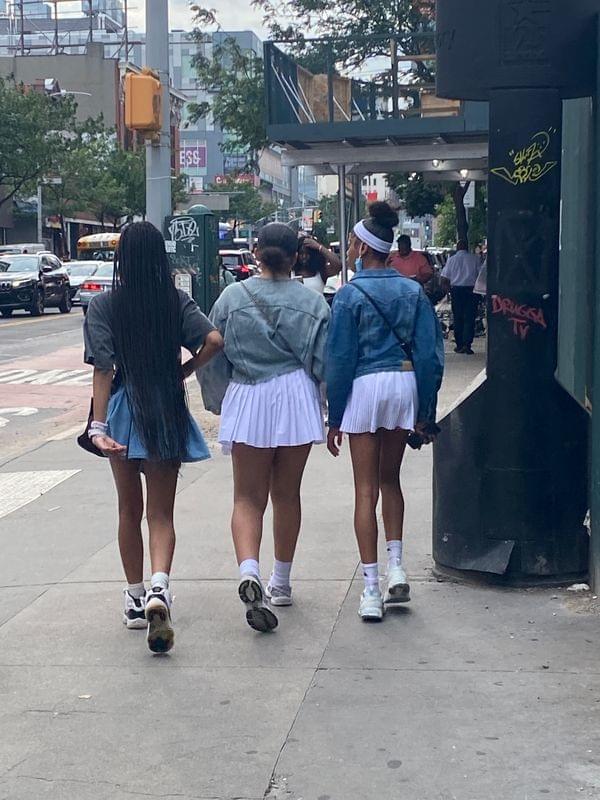
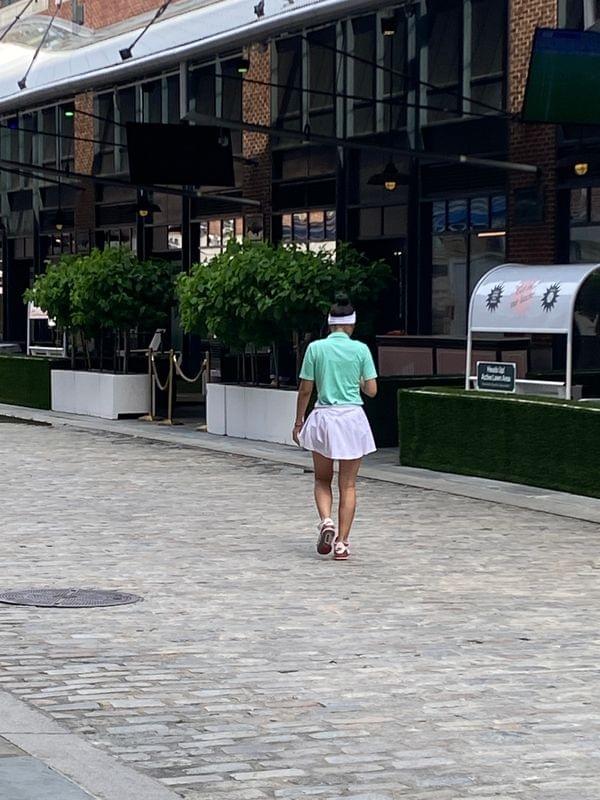
Photo: Niena Etsuko Hino
One of the most telling ripple effects of pickleball appears in fashion, where two distinct consumption narratives are developing in parallel.
The first is rooted in tenniscore aesthetics. White pleated skirts, polo shirts, and other classic tennis-inspired pieces are being embraced as lifestyle fashion, regardless of whether the wearer actually plays the sport. Pickleball’s blend of refinement and casual ease has helped popularize a clean, preppy, and slightly sporty look—highly visible across New York this summer.
The second narrative targets the once-a-week player. Here, functionality takes priority. Bags, cases, and accessories emphasize mobility, storage, and versatility, allowing consumers to move seamlessly between work and light physical activity. Products are chosen not for athletic performance alone, but for their ability to operate across multiple contexts.
Market data reflects this duality. Verified Market Research estimates the global pickleball apparel market at $1.56 billion in 2024, with projections reaching $3.35 billion by 2031. In May, H&M promoted activewear with the tagline “Hit the pickleball court in preppy fashion,” while Kate Spade and Anthropologie introduced dedicated pickleball paddle sets—clear indications that brands are treating this space as a serious growth category.
How Pickleball Is Rewriting the Value of Urban Space
Pickleball also offers a compelling lesson in placemaking.
Across New York, underutilized spaces—rooftops, vacant warehouses, parking areas, and even unused building entrances—are being transformed into pickleball courts.
This is more than an efficiency play in real estate. Spaces once perceived as transitional or incidental are being redefined as destinations—places where people want to linger, gather, and return. For brands across industries, the implication is clear: stores and facilities must evolve from transactional points into experiential and community-oriented environments.
A notable example is Swing into Success, hosted at Hell’s Kitchen Pickleball and co-organized by Atrium and Salesforce. The event brought together leaders from the AI and data sectors for a hybrid experience combining play, talks, and cocktails. Rather than positioning the venue as a place to sell, the event reframed it as a place to spend meaningful time together.
Lowering the Barrier to Connection
Pickleball courts function not only as urban sports venues but as infrastructure for relationship-building. They can be installed in dense city environments, require minimal time commitment, and allow participation regardless of skill level. Crucially, players can converse while playing—an attribute that aligns naturally with business and networking contexts.
In Japan, business relationship-building has traditionally been associated with golf, an activity with high barriers to entry in terms of skill, equipment, time, and access. Pickleball presents a stark contrast. It offers an urban, low-threshold environment for shared experience.
Observing beginners play, one might liken pickleball—through a Japanese cultural lens—to hanetsuki, a traditional paddle game. While pickleball is more formally structured, its fundamentals are intuitive: hitting the ball, sustaining a rally, and connecting with an opponent. The plastic ball travels relatively slowly, and the sound it makes evokes a rhythmic, almost playful quality. Compared with tennis or badminton, the scale feels forgiving rather than intimidating.
This design minimizes skill disparity. Where other racket sports often discourage beginners by breaking rallies quickly, pickleball allows play to continue even when skill levels vary. Participants are more likely to feel included than exposed.
That balance—being able to participate without embarrassment, and even with humor—is precisely why pickleball adapts so well to business and social settings. In many ways, it works because it does not try too hard to look impressive. That restraint reflects a broader shift in contemporary values.
What Brands Should Take Away
The rise of pickleball highlights a fundamental change in how consumers choose places and experiences. Function alone is no longer sufficient. Meaning, experience, and connection now drive value.
Pickleball—and the environments built around it—operate as platforms that integrate all three. The real question for brands is not whether to engage with pickleball itself, but how well they understand the underlying shift in consumer priorities that it represents.
This article is part of Insights by Niena Etsuko Hino, a collection of selected English articles and translations exploring branding, executive presence, and cross-cultural business strategy.